Working in mental health means holding stories. Some heavy, some hopeful, while others are still unfolding. Yet when the session ends, you can’t always know how the week will treat your clients — a panic spike at work, a relationship rupture at midnight, or even a small win they wish they could share before it fades. Clients carry a lot between appointments, and sometimes that space feels too wide.
This is where secure internal messaging for therapy practices becomes more than a tool of convenience. It becomes a clinical companion. It’s a practical, privacy-focused channel for sharing reminders, resources, administrative notes, and brief encouragements between appointments. While messaging keeps the client-therapist connection open, it is not a space for therapy or crisis support. Rather, secure messaging helps keep essential communication organized and accessible without blurring the boundaries of clinical care.
Below, we’ll explore how secure messaging enhances engagement and promotes better treatment outcomes through practical support, administrative efficiency, and resource sharing while respecting the purpose and limits of each therapeutic relationship.
What Is Secure Internal Messaging for Therapy?
Secure internal messaging acts like a bridge between appointments. It keeps the relationship warm and accessible. The goal is not to provide 24-hour counselling. The goal is to create space for meaningful touchpoints that reinforce safety and connection. A simple message like, “I tried breathing exercise today and it helps me settle,” can help validate progress.
Using secure messaging platforms provides therapists with a private channel to receive updates, send encouragement, exchange resources, and help clients reflect on moments that would normally fade by the next appointment. They keep small but important details from slipping through the cracks so sessions can be focused and present.
3 Key Ways a Secure Internal Messaging Platform Boosts Engagement
Engagement can grow when communication feels safe, easy, and welcomed. Secure internal messaging for therapy practices encourages clients to participate in their healing journey beyond the appointment itself.
1. Encourages Proactive Communication
While you may encourage your clients to reach out to you when they need to, some may worry that a thought is “too small” to email about. Secure messaging can help lower that emotional threshold. The platform becomes a place where clients can share reflections without feeling like they need to format an email or draft something formal. When communication feels natural, they may reach out sooner rather than later.
For example, a message saying, “I had a hard moment today and used the grounding exercise,” can help you connect with the lived reality of your client’s week. It keeps therapy integrated into everyday life, rather than restricting it to a single hour.
2. Supports Skill Use and Reinforcement
Therapeutic tools only become habits when they are practiced regularly. Clients may leave the session motivated, but motivation can fade when stress arises. Messaging allows gentle follow-up, encouragement, and access to coping strategies when they are needed most.
The following are a few examples of how skill reinforcement becomes easier through secure messaging:
- Coping strategy reminders: Short messages to encourage clients to use breathing exercises or self-soothing techniques.
- Homework accountability: A message prompt that encourages a client to reflect on journaling goals or value work.
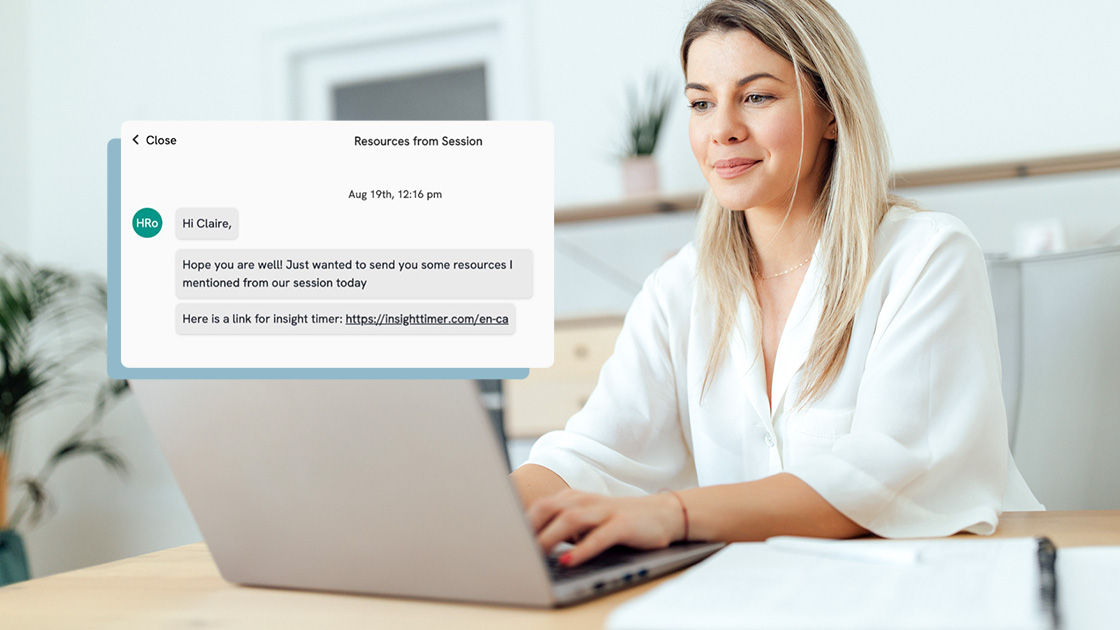
- Resource delivery: Worksheets, links, or guided audio files shared securely and stored for reference.
This can help keep treatment active instead of passive and learning moves from theoretical to lived experience.
3. Reduces Administrative Load and Protects Session Time
Non-session communication often involves scheduling changes, billing questions, or requests for paperwork. These small tasks can take over inboxes and eat into valuable session time.
When clients use a secure messaging platform for day-to-day administrative contact, therapists reclaim more of the session for clinical work and emotional processing.
Supportive benefits of secure messaging include the following:
- Fewer inbox threads: Communication stays organized in one protected space.
- Less forgotten information: Session notes and messages remain linked to the client record.
- More emotional room for therapy: Sessions start grounded rather than administrative.
How Engagement Through Secure Messaging Improves Treatment Outcomes
Connection and outcomes are deeply linked. Staying connected in practical, non-clinical ways can support progress and engagement. With secure messaging, clients are more likely to remember resources for their next session and may show up more fully for growth.
Encourages Treatment Follow-Through
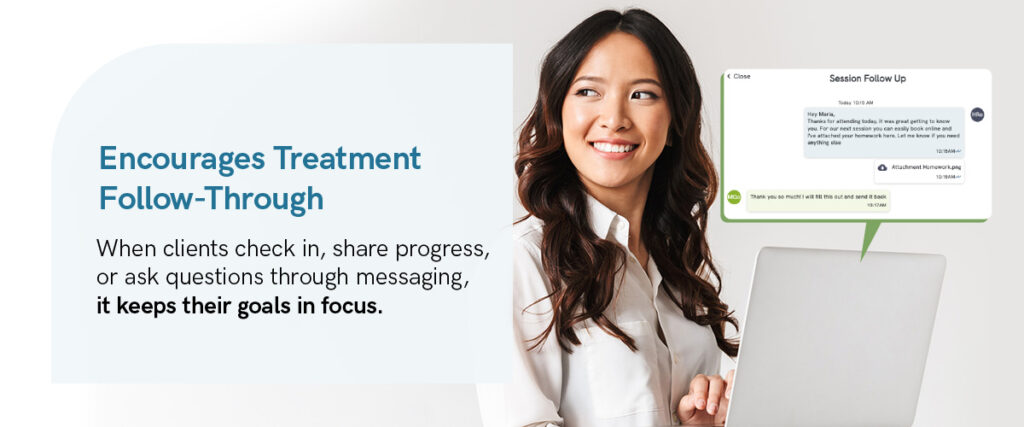
Therapeutic strategies require repetition for change to take root. When clients check in, share progress, or ask questions through messaging, it keeps their goals in focus. This kind of encouragement helps clients stay committed even on difficult days. Small messages can create big shifts over time.
Creates More Efficient and Informed Sessions
When updates are shared ahead of a session, it allows you to arrive with a clearer understanding of the context. Instead of spending half the appointment remembering what happened last week, the conversation can begin where the emotions truly sit today.
For example, let’s say your client messages about a conflict with a partner. You can review the message before the appointment, and this allows the session to begin deep with the current challenge, not at the surface.
Supports Early Intervention During Distress
Secure messaging is not a crisis service. It does, however, offer clients a safe place to express distress early. When clients feel overwhelmed between sessions, reaching out privately can prevent emotional buildup. Therapists can acknowledge the message, offer grounding suggestions, or schedule an earlier appointment when appropriate. This emotional safety contributes to positive treatment outcomes.
Choosing the Right Secure Messaging Platform for Your Practice
Therapists deserve tools that protect client privacy, feel intuitive to use, and fit naturally into everyday workflows. When evaluating secure internal messaging for mental health practices, the following features matter:
- Personal Health Information Protection Act (PHIPA) compliant security: Data protection that meets Canadian privacy standards, including encryption and secure data storage.
- Integrated workflow support: Messaging that connects with notes, scheduling, billing, and client records to reduce the need for multiple platforms.
- Ease of use: A platform that feels simple for both therapists and clients encourages consistent adoption.
- Accessible on mobile browsers: Clients can send messages without needing to download new apps.
- Document sharing: Ability to share worksheets, forms, or progress notes securely.
- Client profile tagging: Tag features help therapists categorize and organize clients in ways that support workflow and clarity.
Selecting a platform that supports everyday work means less time juggling tools and more time building relationships.
Frequently Asked Questions
Get your pressing questions on secure messaging for therapy answered.
1. Is Secure Messaging Meant to Replace Therapy Sessions?
No. Secure messaging is not a substitute for therapy sessions. It serves as a supportive bridge, helping clients stay connected to their progress between appointments. It allows space for reflection, questions, and small check-ins while preserving the depth and purpose of scheduled sessions.
2. How Often Do Clients Use Secure Messaging?
Frequency varies from person to person. Some clients may send occasional updates or questions. Others may check in weekly to reflect on skills they practiced or challenges they met. Therapists maintain boundaries that feel healthy for both sides, while clients gain support.
3. Does Secure Messaging Work for Both Solo Practices and Group Practices?
Yes. Secure messaging can support a solo practice by keeping communication safe and organized, and it can help group practices by creating consistency in how client messages are handled. Both practice types benefit from a single protected place for communication.
4. What if a Client Sends a Message During Distress?
Secure messaging can help clients express when they feel overwhelmed, so the therapist can guide them toward grounding strategies or schedule a session sooner when appropriate. It isn’t an emergency tool, and therapists need to clarify boundaries so clients know when to reach out to crisis resources.
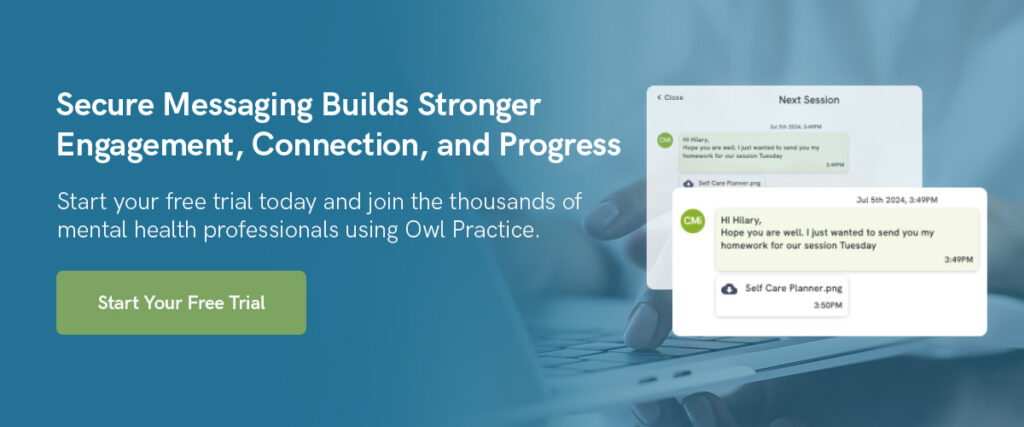
Secure Messaging Builds Stronger Engagement, Connection, and Progress
Secure internal messaging is a supplement to the powerful work of therapy. As a support tool, it keeps practical details clear and helps both clients and therapists stay organized between sessions. With strong boundaries and intentional use, secure messaging can strengthen engagement and make sessions more focused and effective.
For Canadian mental health professionals seeking a secure way to stay connected between appointments, a trusted practice management solution can provide a valuable resource. Owl Practice offers PHIPA-compliant secure messaging designed specifically for mental health professionals in Canada. It integrates with scheduling, notes, forms, and client records, so communication is stored in one secure space.
Start your free trial today and join the thousands of mental health professionals using Owl Practice to care for clients with ease, compassion, and confidence.