Many therapists have questions surrounding artificial intelligence (AI) and its role in their field. The ethics of using AI as a mental health professional can be nuanced, but it can be an advantage for your practice if you approach it carefully.
How AI Can Help Therapists and Clients
When used responsibly, AI has many useful applications for therapists and their clients. The most significant benefits of using AI in therapy are saving time and making things more accessible.
AI screening tools can identify at-risk individuals to enable earlier interventions. On a day-to-day level, AI can give therapists more time to spend with clients and improve their focus by automating tasks like scheduling and note-taking. AI tools may also make it easier to pull up important documents or summarize research to simplify therapists’ non-session work.
AI-powered chatbots enable clients to do practical tasks using natural language instructions, enhancing the client experience. These AI tools could help them schedule appointments or access expert-written guides or other mental health resources when there’s not a person to answer the phone. This accessibility can be crucial to ensuring everyone gets the help they need when they need it.
Ethical Concerns With AI in Mental Health
Of course, there are some concerns that muddy the ethics of using AI as a mental health professional. It’s important to recognize these potential downsides of the technology so you can use it safely.
No matter how advanced it gets, AI can never replace clinical judgment or dispense medical advice. As smart as AI can be, it often lacks nuance, empathy, and other important human abilities key to mental health care. Therapists must only use AI as a tool, not as a replacement for their expertise or core work.
Some AI applications also introduce privacy and security risks. However, there are safe options available. Given this spectrum, it’s important to learn how to choose a safe AI tool and ensure it complies with relevant regulations. Therapists must avoid giving any AI system access to identifiable client information.
Use AI Safely With Owl Practice
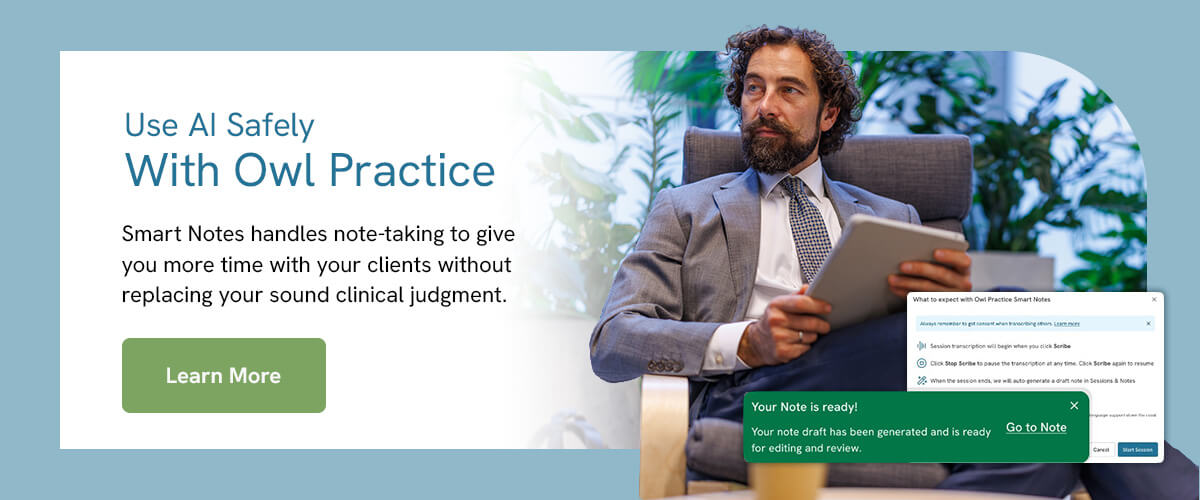
AI is ethical for a mental health professional to use when you understand the risks and apply it in areas where it’s safest and most effective. Owl Practice’s upcoming Smart Notes feature is a great example. This compliant and secure tool handles note-taking to give you more time with your clients without replacing your sound clinical judgment.
Smart Notes is coming soon, so you can join the waitlist today to use it as soon as possible or learn more. We are here to support you and help you safely and effectively modernize your practice.